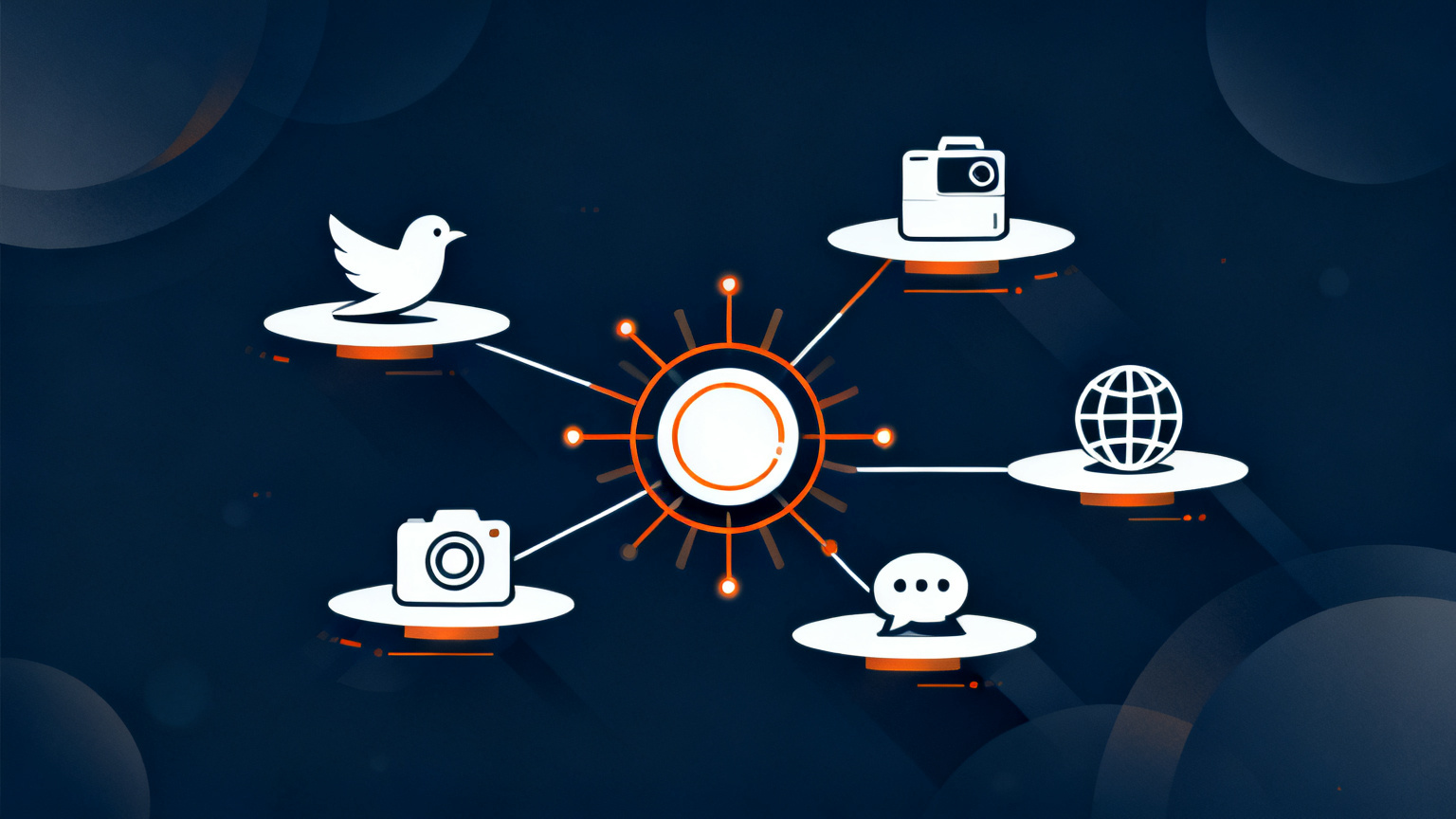
Businesses that want to automate social media posting across all platforms are usually past the point of wanting a simple scheduler. They are trying to solve a bigger problem: how to keep a consistent, on-brand presence across eight or more channels without dedicating a full team to the task. The good news is that this level of automation is achievable, but it requires understanding what "automation" really needs to cover if it is going to hold up week after week.
Most businesses that try to automate their social presence start with a scheduling tool and stop there. They write the captions themselves, design the graphics themselves, and only use the tool to queue up posts at set times. That approach saves a few clicks, but it does nothing for the actual bottleneck, which is the writing, the design, and the platform-by-platform adjustments that eat up hours every week.
Why Posting Across All Platforms Is So Demanding
Every platform has its own expectations. A caption that works on LinkedIn reads as too formal for TikTok. An image sized for Instagram gets cropped awkwardly on Pinterest. Facebook audiences respond to different pacing than X or Threads. Multiply those differences across eight or more channels and the workload for one person, or even one small team, becomes unsustainable. This is why so many businesses post inconsistently: not because they run out of ideas, but because they run out of hours before the next platform's version of the post is even drafted.
What Full Automation Actually Requires
To genuinely automate social media posting across all platforms, a system needs to do more than schedule. It needs to understand the brand well enough to write in its voice without a human rewriting every draft. It needs to generate visuals that match brand colors and style, not generic stock imagery. It needs to adapt copy and format for each individual channel rather than publishing the exact same post everywhere. And it needs to handle the publishing calendar itself, so content goes out daily without someone remembering to hit a button.
DocFluence is built around this exact definition of automation. It learns a brand directly from its own website, then writes SEO-optimized blog content and produces branded carousels, infographics, and short explainer videos with narration and captions from that same brand foundation. From there, it publishes daily across Facebook, Instagram, X, LinkedIn, Threads, Pinterest, Snapchat, and TikTok, adjusting format and tone for each destination rather than pushing one generic post everywhere.
Keeping Humans in the Loop Without the Manual Grind
Automation does not mean losing control over what goes out under a brand's name. DocFluence is review-first, which means drafts are available for approval before they publish rather than disappearing into a black box. This matters most for medical and professional practices, agencies managing multiple clients, and multi-brand organizations where tone and accuracy carry real weight. The system does the repetitive work of drafting, designing, and formatting, while final judgment stays with the business.
Beyond Publishing: Comments, Messages, and Site Visitors
Posting content is only part of maintaining an active social presence. Comments and direct messages pile up quickly once posting becomes consistent, and ignoring them undercuts the exact engagement automation is supposed to build. DocFluence also answers comments and DMs across channels, and it runs a 24/7 chatbot on the business's own website trained only on that brand's content, so visitors get accurate answers around the clock without a staff member monitoring every conversation.
Turning Automation Into Strategy
A full automation stack does not just save time, it produces intelligence that shapes what gets published next. DocFluence surfaces keyword and content-gap data so businesses can see what topics are already ranking, which ones are close to ranking, and which gaps competitors have not filled. That turns a daily posting habit into a longer-term content strategy instead of a routine that runs on autopilot without direction.
Getting Started Without Rebuilding Your Workflow
One of the more practical advantages of automating across all platforms in one system is that it does not require replacing existing tools. DocFluence pushes finished blog drafts directly to Wix, Kajabi, WordPress, or any other platform a business already uses, so the automation layer sits on top of current workflows rather than forcing a rebuild.
For a small or mid-sized business, an agency managing several clients, or a multi-brand organization trying to keep every channel active, automating social posting across all platforms is less about replacing people and more about removing the parts of the job that were never a good use of anyone's time. Writing, designing, formatting, scheduling, and responding can all run continuously in the background, freeing the humans behind the brand to focus on strategy and relationships instead of production.
← All articles