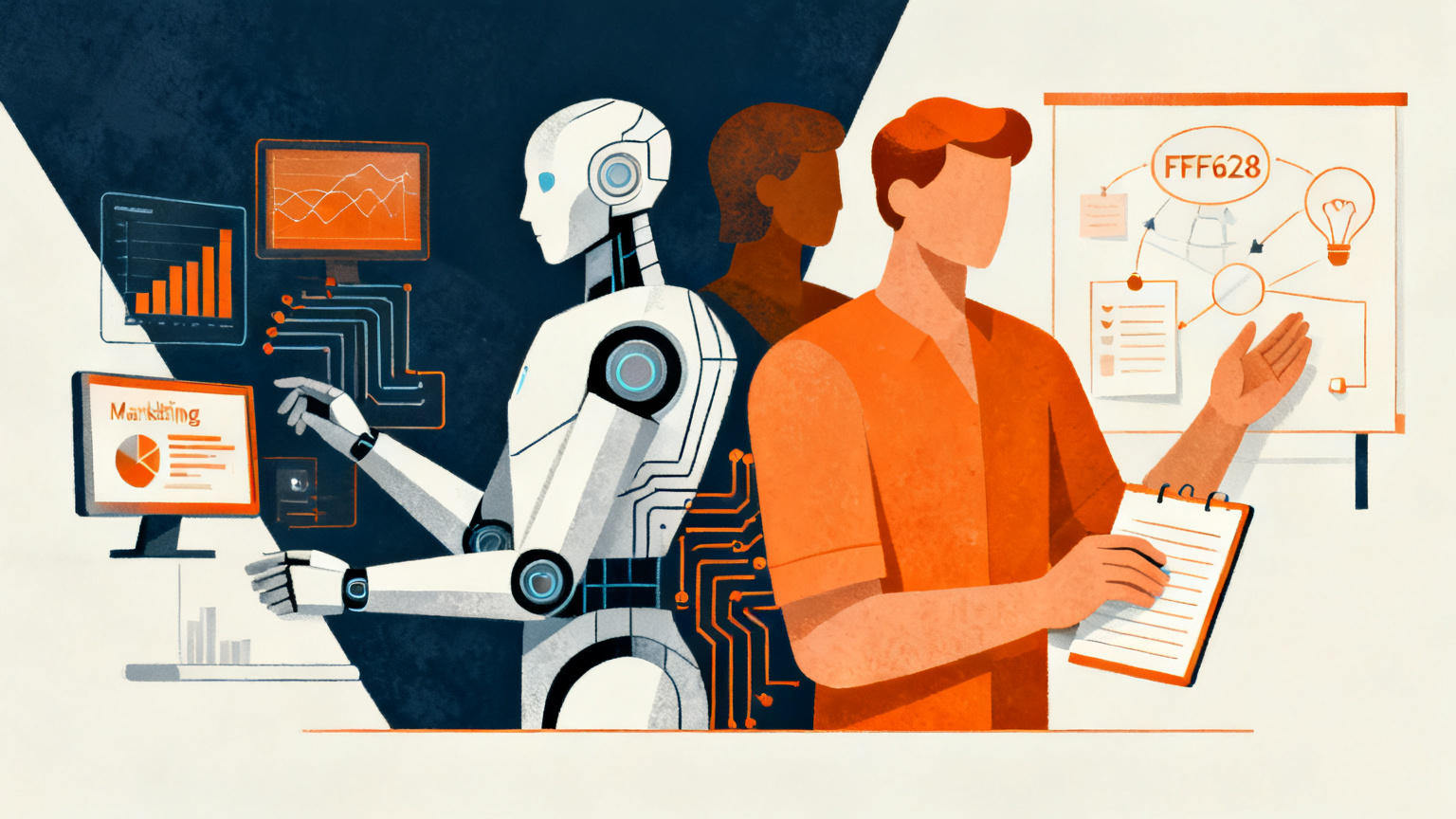
The question of whether you can replace a marketing department with AI is no longer theoretical. Business owners are asking it because the math has changed. Hiring a content writer, a designer, a video editor, a social media manager, and someone to handle SEO and customer replies costs far more than most small and mid-sized businesses can justify, yet showing up consistently online is no longer optional. This post breaks down what is genuinely possible in 2025, what still requires a human, and how a platform like DocFluence closes the gap.
What a Traditional Marketing Department Actually Does
Before deciding what AI can replace, it helps to name what a full marketing department produces day to day. Someone writes blog posts and researches keywords. Someone designs graphics and carousels. Someone scripts and edits short videos. Someone schedules and posts across every social channel the business uses. Someone monitors comments and direct messages so leads do not go cold. And someone tracks what competitors are ranking for so the business does not fall behind. Each of these is a distinct skill, which is exactly why departments end up with four to six specialized roles even in a modest operation.
Where AI Genuinely Replaces the Work
The output side of marketing, the actual production, is where AI has closed the gap fastest. A platform built for this can research a topic, write an SEO-optimized blog draft with a title, meta description, tags, and internal links, and generate a matching featured image with alt text. It can turn that same content into branded carousels and infographics that match a business's existing visual identity rather than a generic template. It can produce short explainer videos with narration and captions with no camera, no studio, and no editor. And it can schedule and publish all of it across Facebook, Instagram, X, LinkedIn, Threads, Pinterest, Snapchat, and TikTok from a single dashboard, every day, without a human manually logging into eight platforms.
Beyond production, a full platform can also run a 24/7 chatbot trained only on the brand's own content, so website visitors get accurate answers at any hour instead of a generic response or no response at all. It can monitor comments and direct messages across channels and respond in the brand's voice so inbound interest does not sit ignored for days. It can also surface keyword and content-gap intelligence, showing which topics competitors rank for that the business has not yet covered. This is the operational core of a marketing department, and it is the part that AI now handles reliably and continuously.
What Still Belongs to a Human
Strategy and final approval are the two things a business should never fully hand off. Deciding what the brand stands for, which offers to prioritize this quarter, and how to respond to a sensitive situation still requires judgment that comes from the business owner or a trusted lead, not an algorithm. A review-first approach matters here. Content should be pushed as a draft for approval before it goes live, whether that means a blog post routed to Wix, WordPress, or Kajabi, or a social caption waiting in a queue. This keeps a human in the loop without requiring that human to write, design, or schedule anything themselves.
Comparing Standalone Tools to a Full Platform
Part of the confusion around replacing a marketing department with AI comes from conflating two very different categories of tool. Standalone AI copywriters are prompt-driven: you give them a brief, they return a draft, and you still edit, format, design, and publish everything by hand. They are useful for occasional tasks but do not remove the operational burden of running content day to day. A full content platform is built differently. It handles research, writing, design, video, publishing, chatbot support, and reply management from one subscription, which is the difference between a helpful tool and something that functions like an actual department.
Related Reading from DocFluence
- AI-First CRM vs HubSpot: Why Retrofitted AI Isn't the Same as AI-Native
- Automated Social Media Content Creation: A Step-by-Step Guide
- Automated Blog Writing Tool: How AI Publishes SEO-Optimized Posts Without a Writer
What Replacing the Department Looks Like in Practice
For a small business, agency, creator, medical practice, or multi-brand organization, replacing a marketing department with AI does not mean removing all human involvement. It means removing the need to hire and manage four to six separate roles just to maintain a consistent presence. A single subscription can learn a brand automatically from its own website and then write, design, film, publish, and respond every day across every channel the business actually uses. The business keeps the strategy and the approval. The platform keeps the production running.
The businesses seeing the most benefit in 2026 are the ones treating AI as the department's output engine rather than a replacement for judgment. That distinction is what makes consolidation actually work instead of just shifting the same chaos onto a new tool.
See it running on your own brand
Everything described here is what DocFluence does for the businesses already using it: the writing, the publishing, the replies and the reporting, from one login, on the schedule you set, with nothing going out until you approve it.