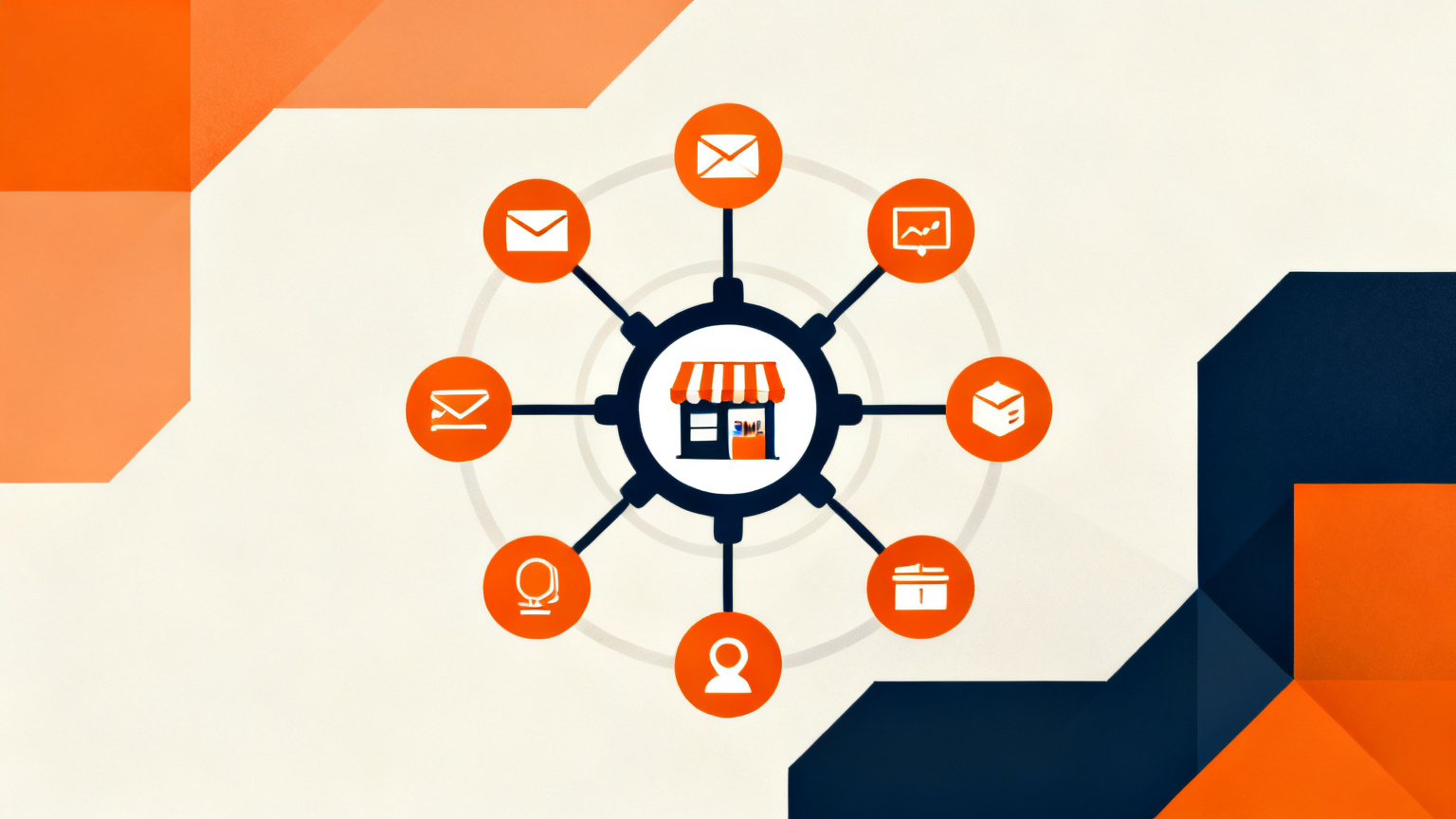
What is marketing automation software for SMBs? At its core, it is software that handles repetitive marketing tasks, sending emails, scoring leads, publishing content, tracking contacts, so a small or mid-sized business does not need a full in-house marketing team to stay consistent. For an SMB with limited staff and no dedicated marketing department, that distinction matters more than any feature list. The right platform turns marketing from a scramble into a system that runs in the background every day.
Most small businesses did not set out to build a complicated marketing stack. It happened gradually: a CRM to track contacts, a separate email tool to send campaigns, a scheduling app to post on social, a design tool for graphics, and some kind of glue tool to connect them all. Each piece works fine on its own, but the business ends up paying multiple subscriptions, managing multiple logins, and doing manual work to keep contact records in sync across tools that were never built to talk to each other.
Why SMBs Need This Differently Than Enterprises
Enterprise marketing automation software is built around large teams: a dedicated email specialist, a social media manager, a designer, a content writer, and an ops person to keep the systems connected. Small and mid-sized businesses do not have that headcount, and they should not need to buy software priced as if they did. The right automation platform for an SMB assumes one person, often the owner, is overseeing marketing alongside everything else they run. That means the software needs to do the actual work, not just organize the work for a team that does not exist.
This is why contact-tier pricing is such a common frustration for growing businesses. Many marketing automation tools charge more as your contact list grows, which means the software bill climbs precisely when the business is succeeding at building an audience. A platform designed for SMBs should not punish growth. A flat subscription that includes CRM, email automation, and publishing regardless of list size keeps the incentive structure aligned with what the business actually wants: more contacts, more engagement, more reach.
What the Software Should Actually Do
Marketing automation software for SMBs should cover the full cycle of marketing work, not just one piece of it. That includes learning the brand from its own website and existing content, writing blog posts and social captions that sound like the business, designing graphics and short videos, publishing across the channels where the audience actually spends time, and following up with leads through automated email sequences triggered by real behavior. It should also handle the CRM layer underneath all of that: capturing contacts from chatbot conversations, quote requests, and engaged comments, then scoring those leads based on real interaction rather than guesswork.
A genuinely useful platform also tells the business what to create next. Search data reveals which keywords are close to ranking, which topics competitors are covering that the business is not, and where content gaps exist. Rather than exporting a report from one tool and briefing a writer in another, the best automation platforms surface that opportunity and let the business act on it immediately, often in a single click.
Review Gates Still Matter
Automation should never mean the business loses control over what goes out under its name. Good marketing automation software for SMBs keeps approval gates built into the workflow. Draft content should be reviewed before publishing, especially early in the relationship with a new platform. Reply drafts for comments and direct messages should sit in a queue for approval before anything sends, particularly on new accounts where trust in the system is still being built. Full automation without any review layer is a risk. Full automation with sensible checkpoints is a system a business can actually rely on.
What to Look for Before Choosing
When evaluating marketing automation software, a few questions separate the platforms that genuinely replace a stack from the ones that just add another tool to it:
- Does it include CRM, email automation, and publishing in one flat price, or will you still be paying for separate tools and stitching them together?
- Does pricing stay flat as your contact list and audience grow, or does it climb with success?
- Does it publish across the channels your audience actually uses, or just one or two?
- Does it include a review step before content and replies go live?
- Does it surface keyword and content-gap opportunities, or leave that research to a separate tool entirely?
The Real Value for a Small Business
The honest case for marketing automation software is capacity. A small business owner or a lean team gains the output of a much larger marketing department without hiring one. Content gets written, designed, published, and followed up on daily, across the channels that matter, while the humans running the business stay focused on the work only they can do. That is what marketing automation software for SMBs is meant to deliver: consistency and reach without the overhead of a full internal team or a stack of disconnected subscriptions.
← All articles